CREATIVITY
EXPERTISE
Alexii’s Global Education Guide
The Fulbright Teachers for Global Classrooms Program (Fulbright TGC) is a year-long professional learning opportunity sponsored by the U.S. Department of State that equips K–12 educators to bring an international perspective to their schools. Through rigorous online coursework, a national symposium, and a two- to three-week international field experience, fellows collaborate with global peers to develop cutting-edge pedagogical practices. Ultimately, the program empowers teachers to foster global competence in their local classrooms, preparing students to navigate and succeed in an interconnected world.
Fulbright Teachers for Global Classrooms allowed me to put meaning, words, and academic resource to a concept that seemed innate. The biggest compliment I ever received was a family friend saying “you are a citizen of the world”. This guide was created to put validity and research to something I tell my students often.
“Obviously, I want you to feel prepared for your Global History Regents (state exam) but I care more that you leave my classroom with a greater sense of empathy and curiosity for the world around you.”
This website is not an official U.S. Department of State website. The views and information presented are the participant's own and do not represent the Fulbright Teachers for Global Classrooms Program, the U.S. Department of State, or IREX.
Fieldwork Reflection
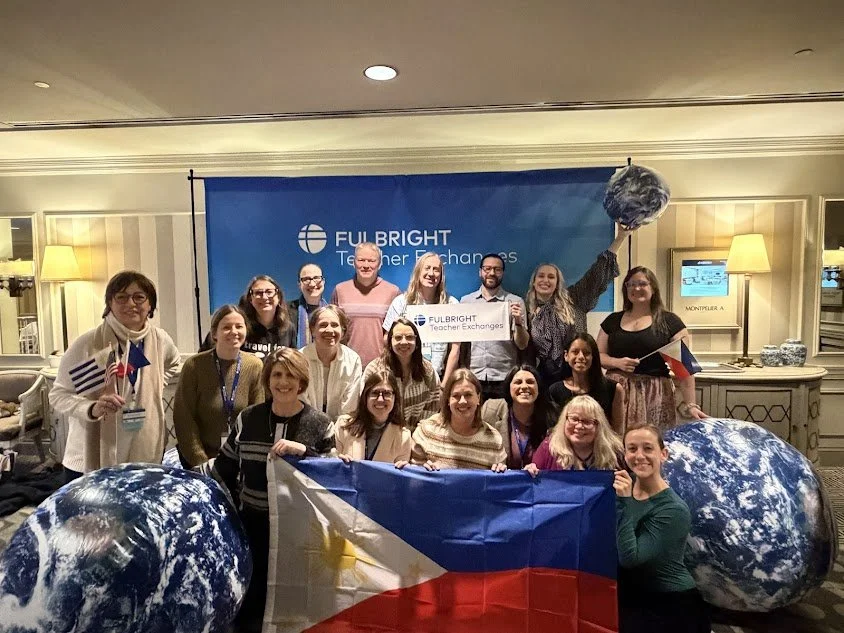
Being honored as a Fulbrighter transforms global education from an abstract concept into living, human connections—allowing me to collaborate directly with international peers, immerse myself in host communities, and bring authentic, real-world insights back to empower my students. For the fieldwork portion of my program, I was incredibly lucky to visit the Philippines.
From July 12th to July 28th, 2026, I represented the U.S. Department of State as an educator as we immersed ourselves in Filipino history and culture, shared celebrations for America’s 250th anniversary, and learned from teachers across the country. I engaged in classroom observations, collaborative teaching, and community dialogue in Davao, Philippines specifically. While my initial intention was to examine Philippine Cold War narratives against Western interpretations of U.S. intervention, my time in Mindanao quickly revealed a deeper, more pressing structural question: How do curriculum frameworks balance local and community-driven narratives in their world history courses?
My question essentially changed when I realized the Philippine Cold War narrative is relatively slim. As I examined the Department of Education history curriculum, I noticed that the Cold War is often taught in an extremely Eurocentric way, as it did not have many different perspectives (a staunchly Catholic country, the Philippines shut down major rebellions and, as a whole, never supported communism). This major "a-ha" moment occurred while observing history lessons in Davao, where learning was deeply anchored in regional, indigenous, and localized histories before zooming out to global events. This can be seen first and foremost through translanguaging. Where many subjects are taught in English to help prepare Filipino students for a globalized world, history is intentionally taught in Filipino. I find this extremely poetic and view it through a lens of social justice. Children are learning through a language that was once silenced by imperialists. I realized that my own 10th-grade history curriculum in the Bronx often approached global events from a top-down, state-centric perspective. To continue shifting my practice, I am moving toward inquiry-based units that begin with grassroots primary sources and local oral histories, encouraging students to analyze how major historical eras directly impacted daily life at the community level.
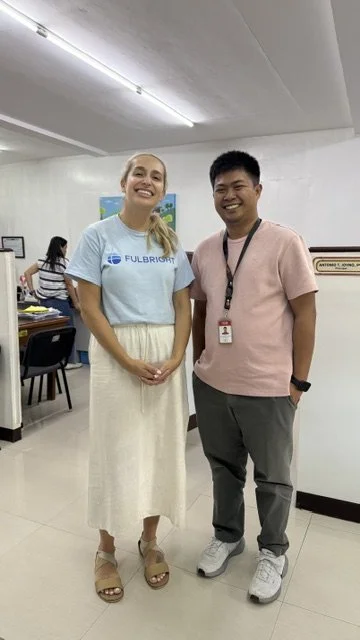
Observing how history, geography, and cultural identity are interconnected in Mindanao inspired me to revise my instructional artifacts. Previously, my units on global conflicts focused primarily on diplomatic treaties and political leaders. Going forward, I hope to model lessons from my cooperating teacher (Sir JM) in Mindanao. Teachers there have the authority to hone in on local circumstances where it pertains to the global curriculum. I hope to further challenge myself to do this much like they do in the Philippines, to ensure that we are getting multiple perspectives and students feel connected to a culturally competent curriculum.
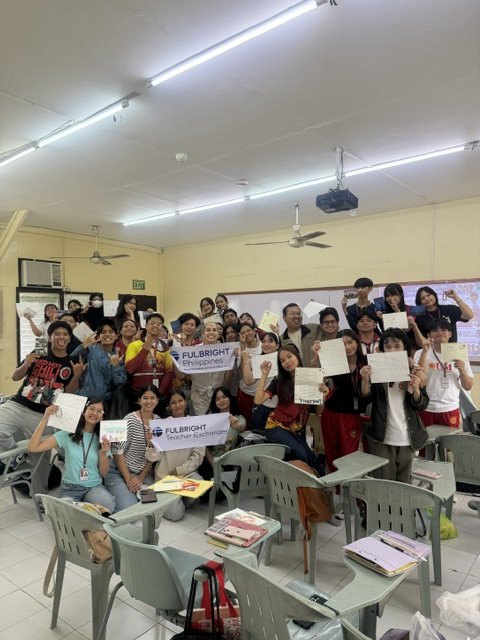
In my host school, I observed dynamic, highly collaborative discussion protocols that allowed students to lead conversations on local heritage and historical memory. Inspired by this, I plan to introduce place-based learning protocols and student-led seminar models in my classroom this fall. These methods will empower students, particularly English as a New Language (ENL) learners, to draw on their own linguistic and cultural backgrounds as assets when interpreting complex global history topics. Sir JM fluently translanguaged for his students, building upon both Filipino and English to create a safe space for taking chances in language learning. I was extremely impressed with this, as classrooms in the Philippines typically have fifty students and only one teacher. I am lucky to have training in both history and language acquisition AND have a co-teacher in the room to split our class of twenty-five students. Teacher optimism and drive to create an engaging, collaborative environment in the Philippines while having twice the number of kids and half the number of teachers was incredibly inspiring.
To help my Bronx students build authentic bridges with other parts of the world, I am leveraging this fellowship to launch a virtual exchange program for the upcoming school year. Connecting my 10th-grade history and ENL students with their peers in Davao turns global history from an abstract academic subject into a living, relational experience. By sharing community stories across borders, students will learn that global competence isn't just about studying far-off places—it is about reaching wide, thinking critically, and discovering shared human experiences. Our exchange began with my rising 10th grade scholars writing post-cards and creating friendship bracelets for their new friends in Davao. Teaching my lesson with Sir JM during my fieldwork allotted time for my students in Mindanao to write post-cards back to their new friends. This will hopefully be the first of many exchanges our classrooms can do together this upcoming school year!
Global Education in NYC Schools
In New York City public schools—where our classrooms serve as micro-communities of the world representing hundreds of languages and cultures—global education is not a luxury, but a vital demographic reality. By transforming our diverse hallways into a launchpad for global competence, a global curriculum serves as a critical mirror that validates our students' immigrant heritages while equipping them to navigate NYC’s hyper-connected professional landscape.
This lens is especially urgent in under-resourced communities, where students must be empowered to see themselves not just as bystanders, but as changemakers and leaders capable of transforming their own neighborhoods. Introducing a global perspective expands their horizons far beyond the borders of their immediate hometowns, showing those who feel confined by their circumstances that the world is vast, full of opportunity, and entirely within their reach to explore, impact, and lead.
TEACH
·
LEARN
·
TRAVEL
·
TEACH · LEARN · TRAVEL ·
How to Use this Guide
Think of this guide as your companion for exploring what it means to teach, learn, and travel with a global lens.
Learn: Discover foundational ideas and curated resources designed to help you build a deeper understanding of global citizenship and culturally responsive pedagogy.
Teach: Access practical tools—including inclusive lesson plans, projects, and digital strategies—to bring the world into your classroom in real, engaging ways.
Travel: Step into the field with me. Here, I
share stories, reflections, and pedagogical insights from my immersive global experiences, specifically my July 2026 Fulbright TGC fellowship in the Philippines through my Substack. Please note it is free and you can click “no” to subscriptions to read all posts!